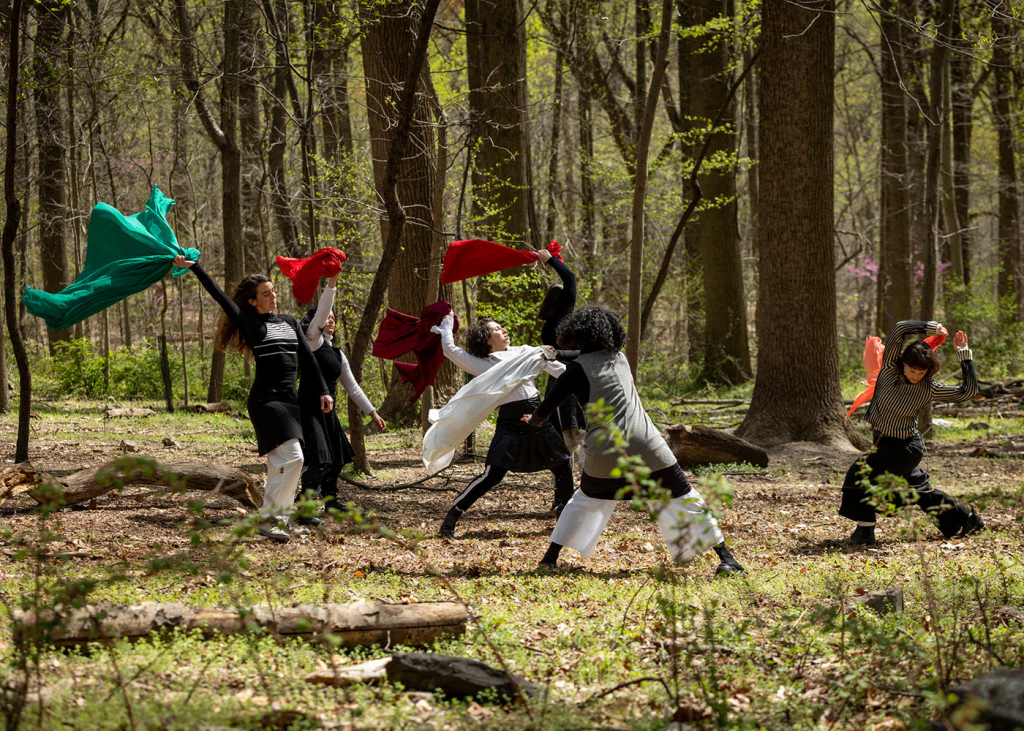
Really looking forward to presenting later this month at the Sonic Days conference at Sonic College in Kolding, Denmark. In my presentation, “Composing Off-Grid: Ecological Sound Design for Site Specific Performance,” I will discuss the work I did as composer and Sound Designer for Silvana Cardell’s Terra: Bodies and Territories. Additionally, I will be demoing custom Ableton Live Instruments I have developed, which utilize Max for Live Devices and the MPE Roli Seaboard controller. Following my talk, participants are invited to experience TERRA in a 360 video on provided VR headsets.
I will be presenting as part of the conference Sound Art Track, which will also feature presentations by Marie Koldjær Højlund, Ragnhild May, and Christian Skjødt Hasselstrøm.
I am honored to share a review of Terra by Merilyn Jackson for Fjord Review, a well-respected Ballet and Dance Online Journal.
Her description of the sound-score captures what my intent was for the piece from day one, blurring the lines between the physical real-time sounds of the environment, and the sounds of the score, between ‘nature’ and ‘music’, past and present. Using sound as a tool to connect audience and performers with the environment.
“…composer Devin Arne, ingeniously dug trenches around and through the perimeters of the space. You couldn’t tell where the sound of an airplane, or cawing bird was coming from, as if everything magically emerged from parts of the forest.” – Merilyn Jackson, Fjord Review.
The access to the full text article, “Three Early Summer Dances” is available to Fjord Subscribers, however all can read the introduction of the article for free.
After years of being an avid podcast listener, I recently found myself on the other side of the microphone! I had a great conversation with the hosts of Philly Has Heart podcast about TERRA: Bodies and Territories, along with choreographer and project creator Silvana Cardell.
Creating the sound score for this immersive outdoor dance performance has been one of the most rewarding projects I’ve worked on – a real journey of growth, collaboration, and ecologically inspired creativity. TERRA explores the connections between women’s bodies and the natural environment, and my role has been to capture the drama of the forest through sound, blending field recordings with electronics and live instrumentation.
In the episode, Silvana and I dive into our creative process – from her approach to choreography to how we’re weaving sound through the trees and hills at the Schuylkill Center. Over the past year, it’s been fascinating to see how art, nature, and social consciousness can come together to create something truly unique and connected to the land.
The show runs June 13-15 & 20-22, so if you’re curious about what we’ve been creating in the forest, come check it out. And if you want to hear more about the project, you can catch our full conversation on the Philly Has Heart podcast.
Last week at the Madeleine Wing Adler Theater, the Jazz Faculty of West Chester University’s Wells School of Music came together for an evening of standards and original music. Playing alongside these incredible musicians is always an honor, and this performance was particularly special.
Each faculty member contributed a tune to the setlist, creating a diverse program that showcased our collective musical voices. My contribution was “Dream” by Japanese composer Ryuichi Sakamoto – you can hear it at the 31:00 mark in the concert video below.
The evening had several memorable moments, including a delightful three-guitar rendition of “Little Sunflower” and the live guitar debut of vibraphonist Marc Jacoby. Watching Marc step out from behind the vibes to explore the guitar was a wonderful surprise for the audience.
This concert held extra significance as both Marc Jacoby and Dave Cullen are retiring this year. After years of dedicated service to the Wells School of Music and countless contributions to the jazz program, it felt like the perfect way to celebrate their remarkable careers. Their influence on students and colleagues alike has been immeasurable, and they’ll be greatly missed.
The camaraderie and musical chemistry on display reminded me why faculty concerts are so special – they represent not just individual artistry, but the collaborative spirit that defines our jazz program at WCU.
Field Recordings and Abstractions, Vol. 1 is a curated collection of field recordings from Southeastern Pennsylvania and Cape Cod, Massachusetts, captured in 2024. These recordings offer a sonic snapshot of diverse locations such as the Gordon Natural Area, Powder Mill Creek Park, and backyard gardens.
The album is part of “Soundscape Conservation: Field Recording as a Tool for Sustainability,” a project led by Devin Arne, DMA, Assistant Professor of Studio Composition at West Chester University. Funded in part by the West Chester University Sustainability Research and Creative Practice Grant, the project aims to document and preserve the natural soundscapes of these regions.
Tracks 1-4 feature extended excerpts from field recordings taken in different locations and seasons. Tracks 5-45 present shorter sound gestures, focusing on individual elements or interactions between the environment and the recordist, such as footsteps or the scraping of logs. Some sounds remain untouched, while others are processed to explore their creative potential.
Recorded with a Zoom H3-VR, this collection offers an immersive exploration of the natural soundscapes, blending artistic intent with environmental preservation. All recordings are available for download and use under a Creative Commons Share-Alike license, inviting listeners to incorporate these sounds into their projects and support open-source audio and environmental awareness.
I had the pleasure of performing a faculty recital with guitarist Dave Cullen at West Chester University’s Wells School of Music. Our duo explored a rich program of modern jazz guitar compositions, blending works by contemporary masters with our own original pieces.
The evening featured music by some of our favorite jazz guitarists, focusing on contemporary material – from Pat Martino’s soulful “Country Roads” to John Scofield’s off-kilter waltz “Hangover.” We delved into Bill Frisell’s contemplative soundscapes with “How Many Miles” and “Thankful,” and closed with Pat Metheny’s beautiful “Minuano.”
Dave contributed three of his original compositions: “Can’t Stay Away,” “Les McCann,” and “In the Pocket,” each showcasing his distinctive combination of funk-grooves with fingerstyle classical guitar. I presented two of my pieces – “Ingmar” and “Early Spring” – alongside Wolfgang Muthspiel’s intricate “Henrysons.”
It was a rewarding opportunity to collaborate with a fellow faculty member and share music that represents the evolving landscape of contemporary jazz guitar. Thanks to West Chester University’s Wells School of Music for hosting this performance and to everyone who attended.
The full live-streamed recording of the concert is available on Vimeo.
I recently presented as part of a panel on Educating the Next Generation of AI-Enabled Musicians at the AES Symposium on AI and The Musician. The conference was organized by Jonathan Wyner and Christian J. Steinmetz and held at the Berklee College of Music in Boston from June 6-8th. The conference presented a variety of perspectives on Music and AI from composers, songwriters, professors, lawyers, machine learning researchers and software developers. It was incredible to meet so many like-minded individuals who were all sorting through both the incredible potential of AI as a powerful tool for creation and for the potential downsides and stress it may put on an already fragile music economy for independent creators.
Below, you will find a detailed description of my presentation, “Finding the Signal Through the Noise: Integrating Generative AI Into Higher Education Music Curriculum,” as well as the slides I presented at the conference.
Overview:
This presentation explores methods for incorporating Generative AI into music curriculum, focusing on discussion and experiential learning as pedagogical strategies to deepen students’ understanding and critical engagement with AI in music. I will discuss results and data from student surveys on Open Labs 2024: Music and Artificial Intelligence, a lecture and discussion series presented at the Center for Music Technology at West Chester University of Pennsylvania. Insights gleaned from these sessions underscore the importance of integrating AI education into music curriculum, equipping future music professionals with the knowledge and skills necessary to navigate the increasingly AI-driven landscape of music production and studio composition.
Description:
Upon graduation, music majors face an uphill battle to establish themselves in a highly competitive music industry. Aspiring artists, session musicians, composers, recording engineers, or industry professionals must assemble what Angela Beeching Miles calls a “portfolio career” built upon multiple income streams. Generative AI, which in 2022-2023 showed incredible potential for creative output in text and images, is now quickly gaining capabilities in audio and video, further complicating matters for emerging artists.
In the near future, up-and-coming musicians may find themselves directly in competition with the outputs of generative AI, particularly in the fields of library music and composition for games and media. Additionally, soon-to-be graduates in creative fields can find themselves confused by competing narratives of AGI hyperbole on the one hand and outright dismissal and denial of generative AI’s capabilities on the other. In this landscape, Music Educators have an ethical imperative to help students find the signal through the noise and better understand the current capabilities and limitations of generative AI for music and audio.
Within this context, I started Open Labs 2024: Music and Artificial Intelligence as a six-part lecture and discussion series at the Center for Music Technology at West Chester University of Pennsylvania. The series engaged students interested in music production and studio composition in critical discourse and hands-on exploration using generative AI systems. Each session delved into distinct aspects of AI in music, including an overview of current technologies, text-to-audio, MIDI generation, remixing applications, timbre transfer, and ethical and economic considerations.
My ongoing research on machine learning applications for music composition since 2018 will serve as a foundation for my presentation. My paper, Technorealism and Music: Towards a Balanced View of Artificial Intelligence and Musical Composition, explores the implications of first-gen symbolic (Aiva) and hybrid algorithmic (Jukedeck) composition on the media composition landscape.
My presentation will outline each of the six sessions of my Open Labs series, giving a template for educators and a roadmap for students looking to expand their knowledge of AI’s current state and future impacts on music creation. Additionally, my survey data from student participants would interest developers hoping to gain insight into what types of applications aspiring music creators found most helpful in their workflows and preferences regarding comprehensive web-based tools versus narrowly focused AU and VST plugins that can be inserted into standard DAWs. In conclusion, the convergence of musical creation and AI represents both a promising frontier and a potential challenge for emerging musicians entering the industry. The integration of generative AI into music creation processes introduces new possibilities for creativity but also raises questions about its implications for artistic expression, economic sustainability, and ethical considerations. In response to these challenges, initiatives like Open Labs 2024 provide invaluable platforms for critical discourse, hands-on exploration, and ethical reflection. By fostering a nuanced understanding of AI’s current capabilities and limitations, music educators play a crucial role in empowering students to navigate this evolving landscape with confidence and integrity.
Duotone Audio recently commissioned me to compose an original score for Samsung’s new “Recommended by the Pros Campaign.” The campaign features creatives from across the globe speaking about how Samsung AI-enhanced devices improve their workflows. I composed a modern percussion-driven score for their collaboration with Korean Director Kim Seong-Hun. Check it out below, and visit the Samsung YouTube page to see the full series of this campaign.
Original Music by Devin Arne 0:28-1:44. Composed for Duotone Audio LTD.
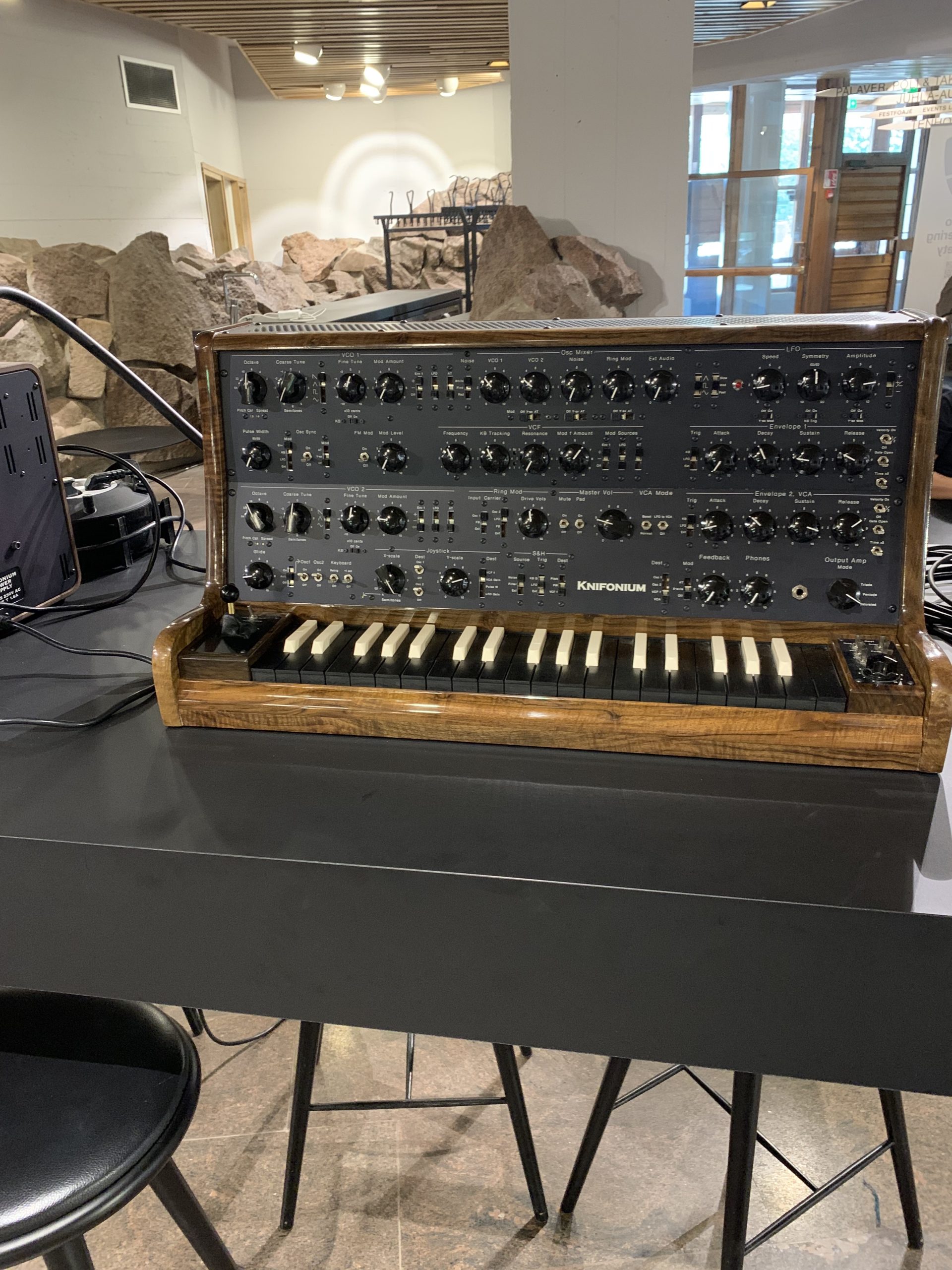
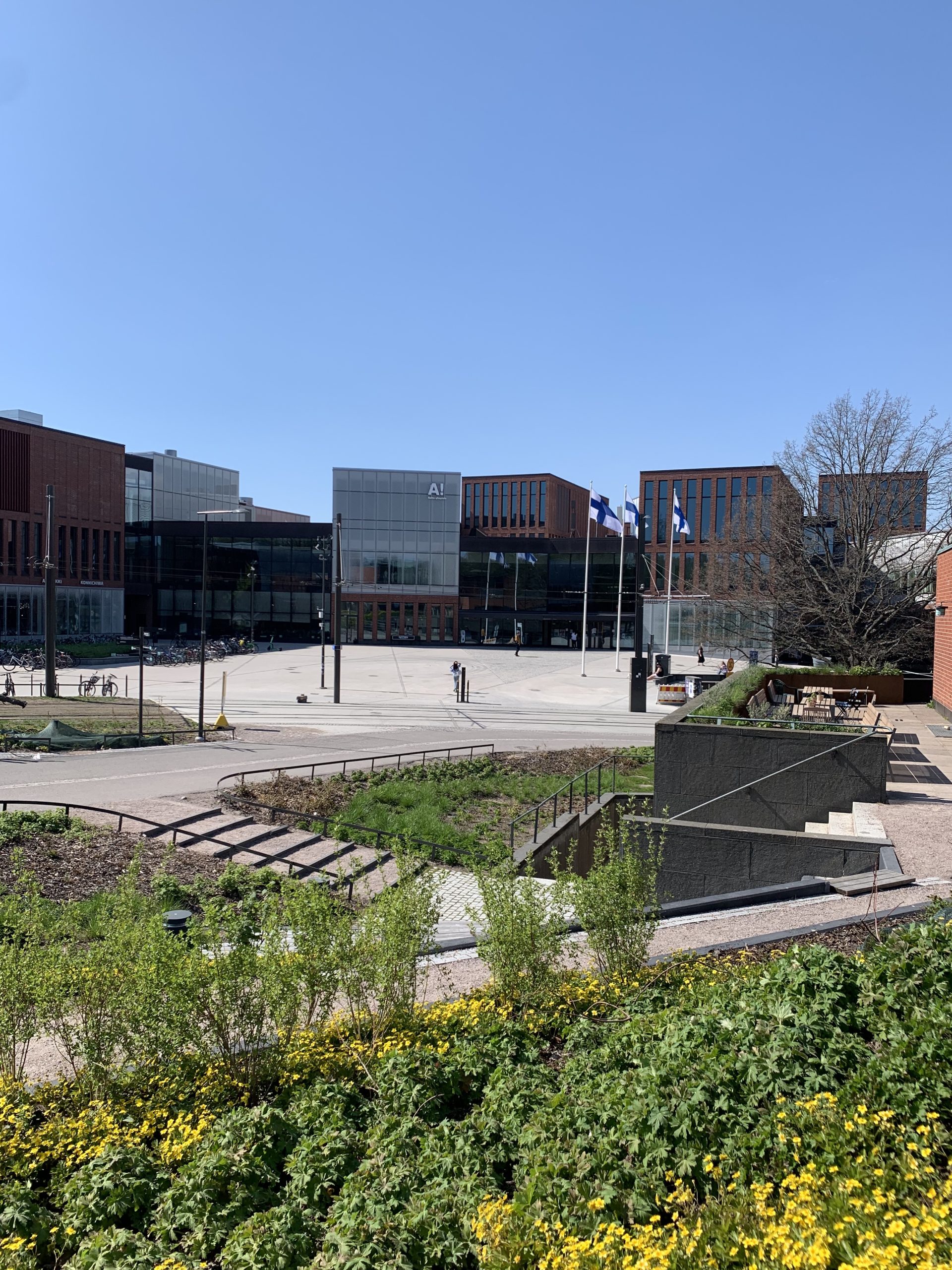
With the support of WCU, I had the pleasure of attending this year’s Audio Engineering Society’s annual European Conference, which was held at Aalto University just outside of Helsinki, Finland. I got to meet some really great people, hear some amazing talks and check out new technologies. I am currently deep in research into AI-powered systems that can be used to enhance media scoring and music production workflows, and it was so inspiring to learn about the latest advances in this field from folks at companies, including NeuralDSP and HarmonAI.
Here are some photos from the event:
Checking in!Talk: Machine Learning for Guitar Amplifier ModelingTalk: A Comparative Study of Music Mastered by Human Engineers and Automated ServicesOutside of Helsinki Music CenterHelsinki Music CenterAalto UniversityKnifonium Tube SynthesizerAalto University
At the invitation of WCU’s head of Jazz Studies, Jonathan Ragonese, I performed with the Criterions Jazz Ensemble at their 2023 spring concert, “The Rebirth of Wonder.”
Check out the video below! I am featured on “On Green Dolphin Street” Arr. Les Hopper (29:15), and “23N 82 W” by Will Russo (59:08).